
Your office chair not only affects comfort but also determines your health and work productivity. If you ordered an ergonomic chair but find yourself more sore after 8 hours of work, then perhaps this isn't the right chair for you. Below are 4 warning signs that you need to replace your chair immediately.
Back Pain
Sign:
If you feel pain or tension in your back, especially your lower back, after sitting for a long time, it's very likely that your chair isn't providing adequate spinal support. This happens when you sit in an incorrect posture or the chair lacks proper back support.
Solution:
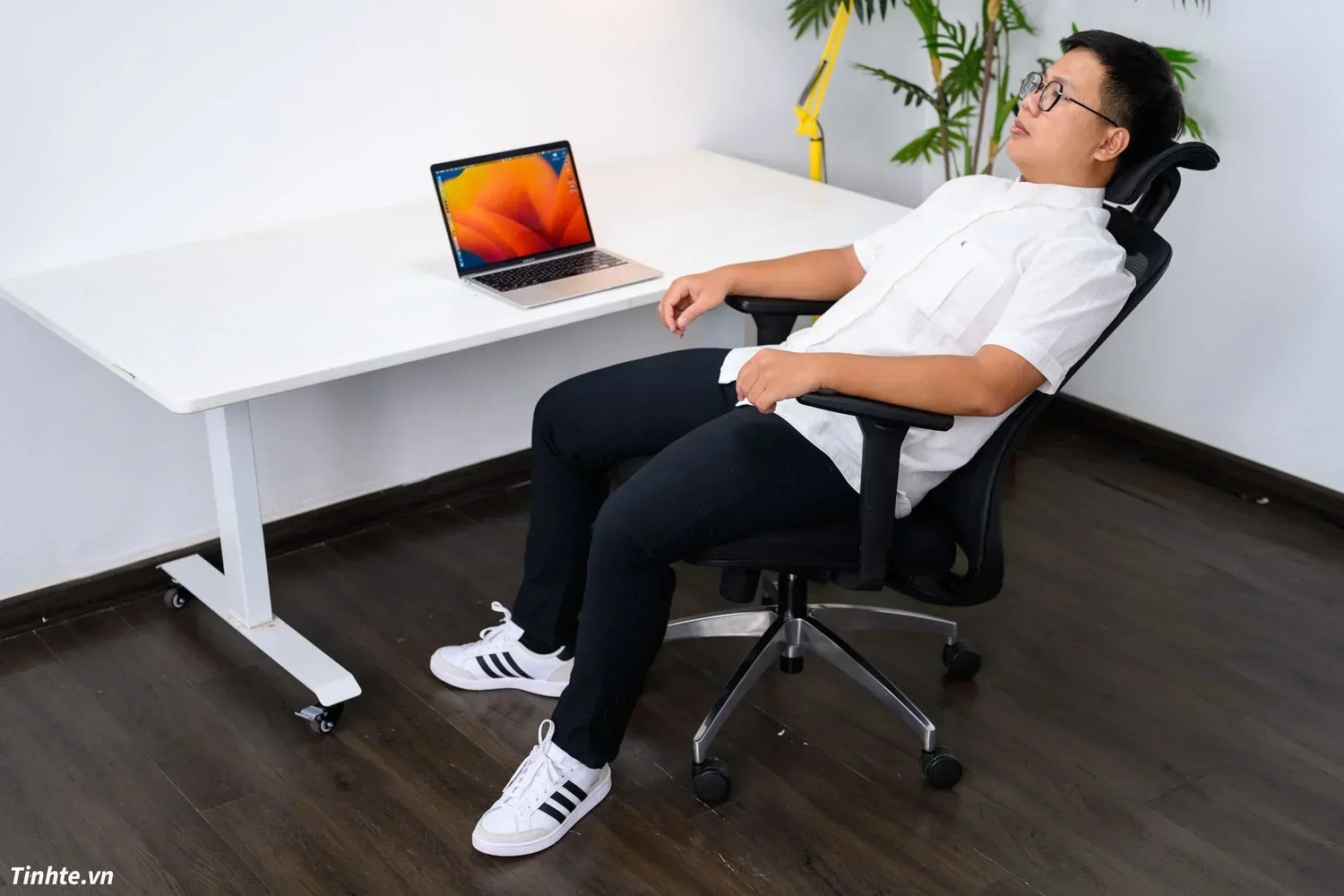
Instead of sitting on a rigid chair with a 90-degree backrest, ergonomic chairs that can recline at various angles, and allow for adjustment of backrest height and mesh tension/slack, are becoming increasingly popular.
- A recline of 100-110 degrees is ideal for the spine
- Lumbar support needs to align with the L1 to L5 vertebrae
- Additionally, users can consider options like dual-back chairs (upper back, lower back), butterfly-back chairs (left back, right back), or single-piece backrests (providing seamless, stable spinal support, reducing chair deformation or warping).

Numb or Tired Legs
Sign:
If you experience numbness in your legs after sitting for 1-2 hours, your chair may not be adjustable to the proper height, or it simply lacks a footrest, putting pressure on your thighs.
Solution:
The chair needs to have height adjustment so that your thighs are parallel to the ground, with your feet fully on the floor or a footrest.
- Create a 90-100 degree angle for your thighs and calves by adjusting the chair to a height appropriate for your body, avoiding situations where your feet dangle without contact.
- Use a folding footrest that comes with the chair.
- Use an external footrest, preferably one with adjustable tilt.

Head and Neck Strain
Sign:
If you feel tension or pain in your neck, especially during long work sessions, the main reason could be that the chair lacks a supportive headrest or neck rest. Insufficient neck support increases the risk of cervical spine issues.
Solution:
Choose a chair with an adjustable headrest to properly support your neck. Make sure the chair's headrest can be adjusted to suit your height.
- Headrest height can be adjusted from 50 cm to 70 cm from the ground or seating position.
- Headrest tilt typically ranges from 90° to 120° relative to the chair's backrest.
- Headrest depth should be adjustable from 5 cm to 10 cm to create a snug fit for the cervical spine.
- The headrest should be contoured to cradle the neck, curving to the body's natural shape.

Chair Lacks Durability, Parts Break Down Quickly
Sign:
Office chairs can become damaged after a period of use, even the smallest parts like noisy wheels when moving, a stiff or un-smooth recline, or a footrest that doesn't fold/unfold correctly. An undurable chair will require frequent replacement, leading to wasted cost and time.
Solution:
Choose a chair made from durable materials from reputable distributors that offer warranty and free spare parts. Investing in a quality chair will save you replacement costs in the long run.





Leave a comment
This site is protected by hCaptcha and the hCaptcha Privacy Policy and Terms of Service apply.