
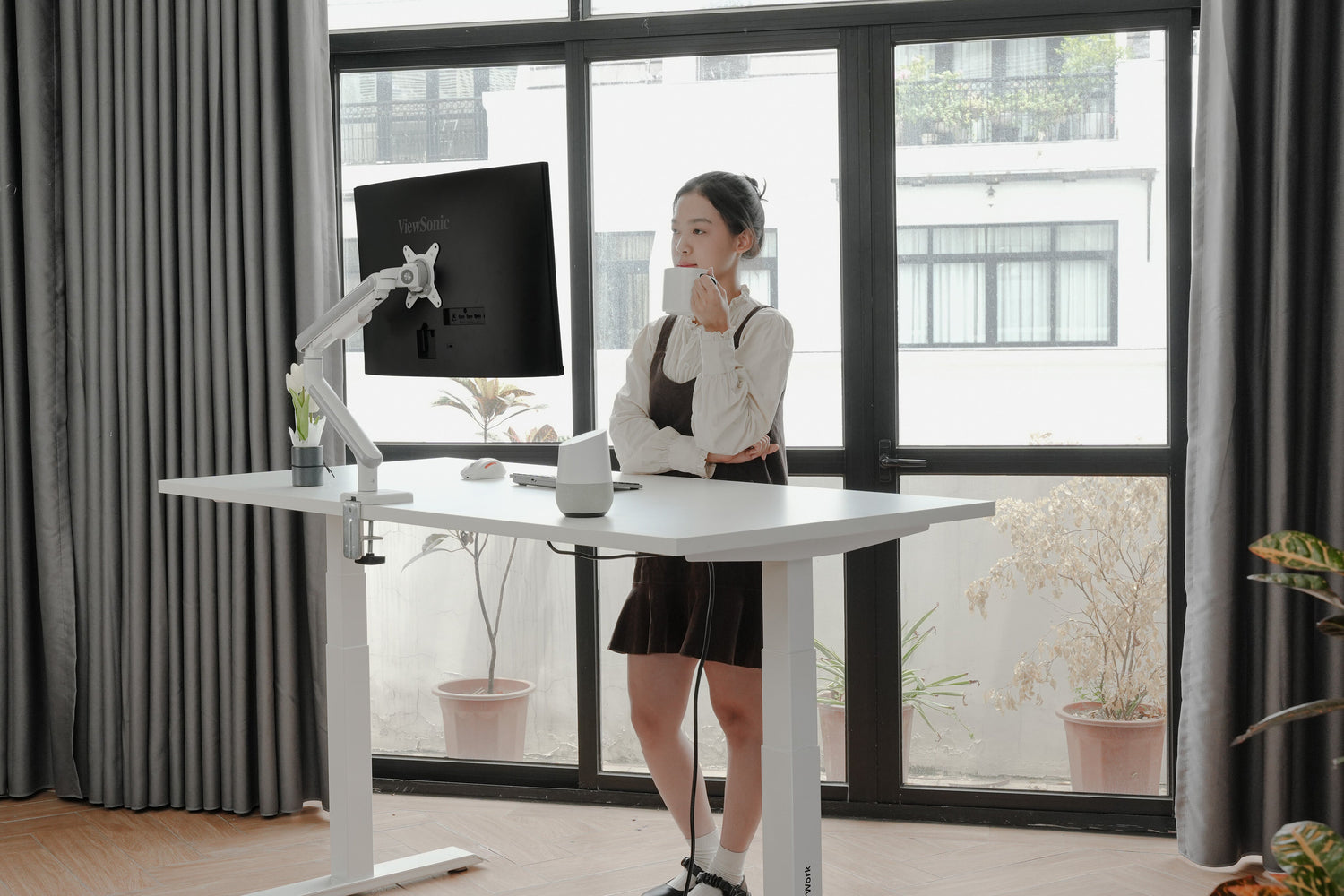
While many offices in Europe consider standing desks a part of ergonomic standards, in Vietnam, the same product is still often regarded as a luxury item, suitable only for individuals and certain specific professions.
Why have standing desks become a popular choice in Western work environments, while in Vietnam, they remain a "pricey, last-to-buy item"—with most businesses not even including standing desks in their equipment lists for office staff?
The answer lies in income, mindset, work culture, market maturity, and awareness of health as well as labor productivity.
The Current State in Vietnam: When a desk is still just... a desk
In Vietnam, the desk is not yet viewed as a tool that directly affects posture, performance, and long-term health. Some typical barriers that make standing desks be seen as luxury items include:
- Income & initial investment costs
Average income leads most users to prioritize "good enough," bargain, and short-term solutions over investing in health and performance.
- Lack of interest in ergonomics
Many people still believe: "Sitting for 8-10 hours is normal." Few realize that a desk can be a risk factor for back pain, leg numbness, loss of focus, and decreased productivity. "Instead of using a standing desk, just standing up and walking around is better" - is a common phrase encountered when mentioning this piece of furniture.

- A culture where sitting for hours equals hard work and productivity
In many environments, standing up, walking around, or changing posture is still seen as a lack of focus. Office workers sitting continuously for many hours, or even burning the midnight oil, is not uncommon.
- Businesses have not prioritized daily posture & health benefits
The cost of purchasing ergonomic furniture is not yet high on the priority list. K-shaped desks, U-shaped desks, or standard office swivel chairs and cantilever chairs remain the popular solutions.
Result: The standing desk becomes a choice for a few "enthusiasts" rather than becoming a standard option, or further, a standard for optimizing productivity.
Europe and the US: When health & performance are priorities
Conversely, in Europe, businesses and employees view the desk with a different philosophy: the desk is not just for working; it plays a role in determining the quality of work.
A report by Transparency Market Research shows that the European standing desk market was valued at approximately $392.6 million in 2023 and is expected to reach $665.1 million by 2034, with a steady growth rate of ~5%/year. This figure does not come from a "temporary trend" but from the actual needs of the workforce: health, performance, and sustainability.

And here are some reasons leading to the popularity of standing desks in the EU:
- Scientific research recognizes the benefits of sit–stand
- Labor laws & office culture
- Investment mindset to increase productivity and retain talent
- Wellness as a benefit standard for modern businesses
When sitting for 8-10 hours a day over 20-30 years, the decline in physical and mental health can escalate:
- Neck, shoulder, nape, back, and leg issues
- Decreased performance after every 2–3 hours of continuous sitting
- Mental fatigue & even burnout
Conversely, when labor health is truly considered an asset, every office worker can improve their health daily, increasing performance for both individuals and businesses, while creating a happier working environment.

That is why standing desks should be seen as a worthy, long-term investment.
With standing desks not yet common in office environments, what can you do to improve your work health:
- Reduce fixed sitting time
- Develop a habit of alternating between sitting and standing while working
- Prioritize durable, stable, and safe products over wobbly ones with limited adjustability
A standing desk can open up a healthier working lifestyle, helping you work productively and effectively.




Leave a comment
This site is protected by hCaptcha and the hCaptcha Privacy Policy and Terms of Service apply.