
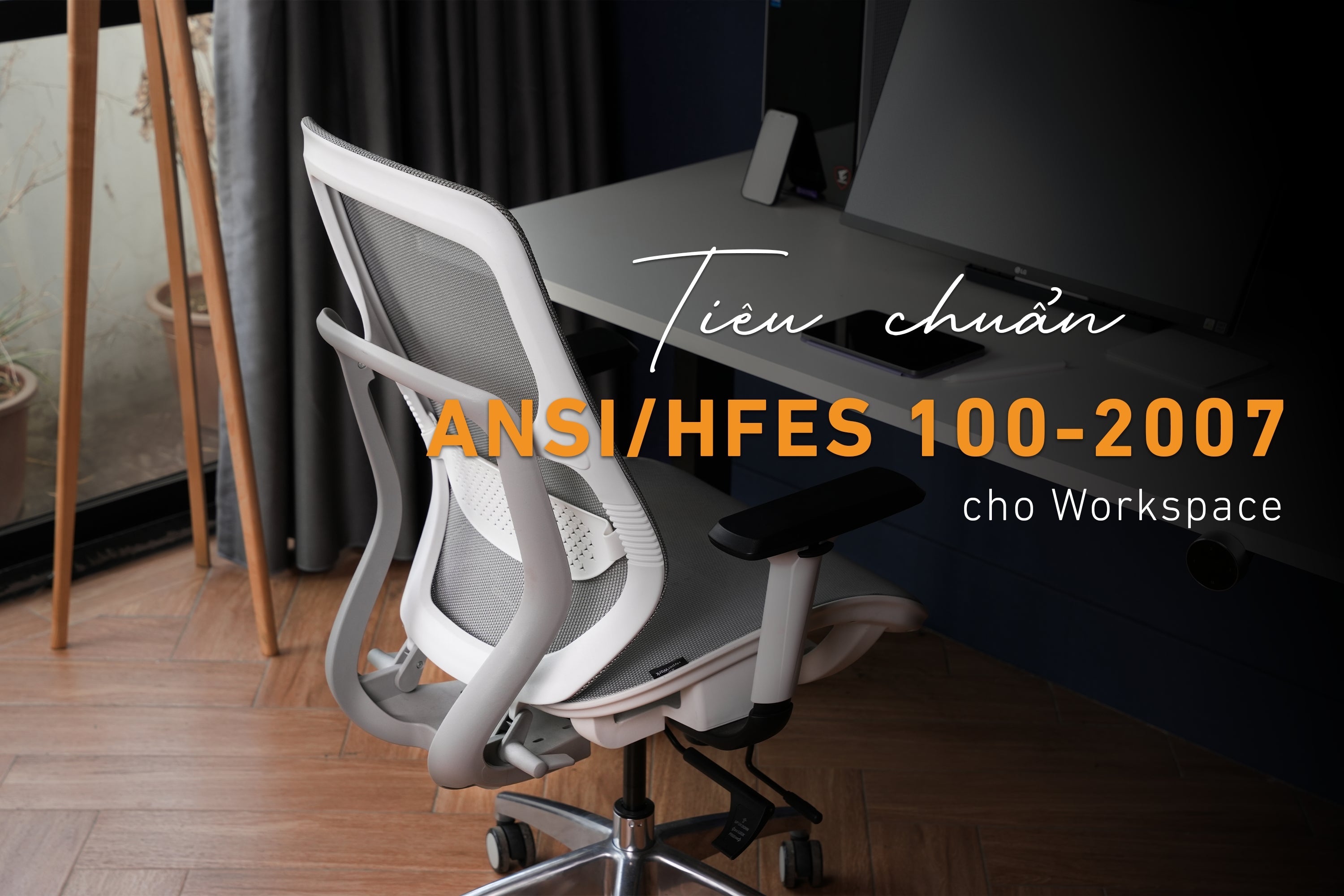
BIFMA X5.1-2017 is a crucial standard established by the Business and Institutional Furniture Manufacturers Association (BIFMA) to assess the quality of office chairs.
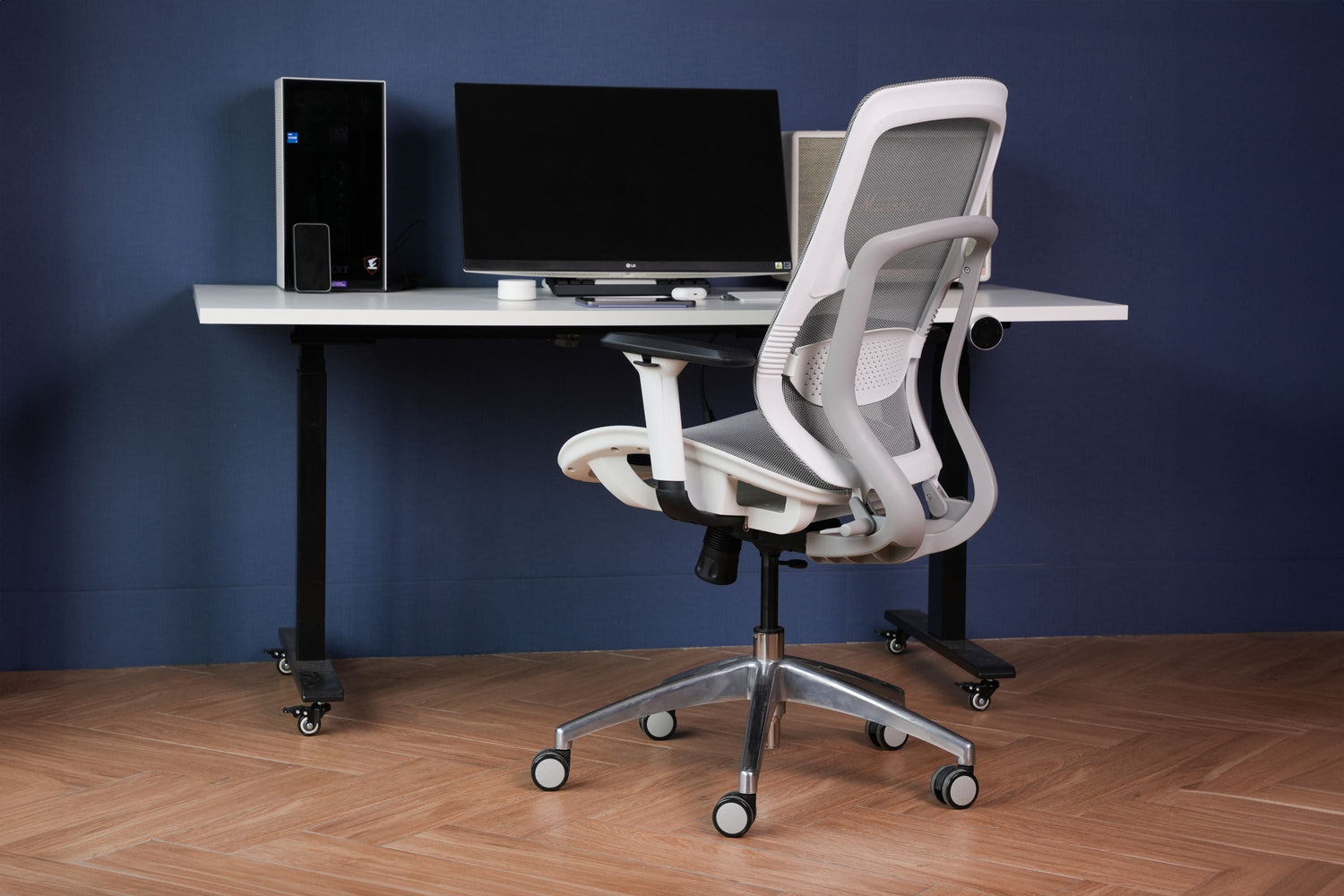
The HyperWork Airy ergonomic chair has undergone a series of periodic tests according to the BIFMA X5.1-2017 standard. The latest results received in December 2024 confirm the product's superior quality, ensuring it meets users' practical needs for long-term use.

1. What is the BIFMA X5.1-2017 standard?
As one of the important standards developed by BIFMA, BIFMA X5.1-2017 evaluates the quality, safety, and durability of office chairs. Some related standards you might refer to include BIFMA X6.1 for lounge chairs, focusing on comfort and aesthetics; BIFMA X5.4 for ganged seating, focusing on durability as it must support multiple users simultaneously;...
BIFMA X5.1-2017 can comprehensively assess the durability and safety of chair products through the following factors:
- Structural durability: Withstands vertical, horizontal, and pulling loads under real-world conditions
- Impact resistance: Withstands strong or sudden impacts
- Safety: Ensures the chair does not tip over, preventing hazards during use
To meet the above factors, manufacturers will conduct several tests, including:
- Seat durability test: Evaluates the ability to withstand frequent heavy loads.
- Armrest durability test: Ensures the armrest does not break or get damaged under impact.
- Backward stability test: Evaluates the chair's stability in situations of leaning or changing posture.

BIFMA X5.1-2017 is widely applied and highly updated; in its 2017 version, the standard was supplemented and improved with new testing methods, making it more suitable for real-world requirements.
2. Airy Chair Structural Durability Test Report
Backward Stability Test
- Standard: BIFMA X5.1-2017
- Result: Passed
- Test data:
Maximum load: 103.33 Kgf
Minimum load: 68.22 Kgf
Average value: 85.77 Kgf

The backward stability test is crucial for checking the chair's load-bearing capacity when users change posture, position, recline, or pull the chair in and out from the desk. These actions create a backward pulling force on the chair's structure. Backward stability testing assesses the chair's ability to withstand these forces, ensuring it does not get damaged or tip over, thus keeping the user safe.
Therefore, a chair with high backward stability helps increase its lifespan and ensures its stability throughout use.

Armrest Horizontal Durability Test
- Standard: BIFMA X5.1-2017
- Result: Passed
- Test data:
Maximum load: 68.31 Kgf
Minimum load: 48.53 Kgf
Average value: 58.42 Kgf
Kgf (Kilogram-force) is a unit of force, where 1 Kgf is equivalent to the force exerted by a 1 kg mass on the ground (under the influence of gravity).
The Airy ergonomic chair has an average armrest horizontal durability load of 58.42 Kgf. To better visualize this, 58.42 Kgf is equivalent to the force you feel when holding an object weighing approximately 58 kg. Compared to the easily understood minimum or maximum load, the average load reflects the level of force the armrest can withstand throughout its use or testing. This is also an important factor to ensure the chair can support the weight of an adult without damage or deformation.

Armrest Vertical Durability Test
- Standard: BIFMA X5.1-2017
- Result: Passed
- Test data:
Maximum load: 116.44 Kgf
Average load: 96.8 Kg

Similar to the armrest's horizontal durability, its vertical durability also reflects this component's load-bearing capacity during actual use. However, you might wonder why the vertical durability parameters are greater than the horizontal durability. This can be explained by:
- When users lean on the armrest (a frequently performed action), the armrest will be subjected to vertical force, from top to bottom. In this case, the armrest needs to be designed to withstand vertical force better and more frequently.
- Meanwhile, the armrest will be subjected to horizontal force when users push or pull this component (a less frequent action that creates lighter impact force). Therefore, the armrest can be designed to withstand horizontal force less robustly than vertical force.

4. Seat Impact Test
*Method: Drop a 102 kg sandbag from a height of 152 mm (6 inches) onto the seat
Result: Passed, the chair did not lose functionality.
This test examines the Airy chair's load-bearing capacity and durability when subjected to a strong impact. Specifically, dropping a 102 kg sandbag from a height of 152 mm onto the seat can be considered a simulation of the stress the chair might encounter during use.
The results show that the chair did not lose functionality; its structure and adjustment mechanisms still operated normally after the impact. Users can be confident in its high load capacity, stability, and durability in a work environment or during long-term use.





Leave a comment
This site is protected by hCaptcha and the hCaptcha Privacy Policy and Terms of Service apply.